Food Safety as Competitive Advantage: What the Sinaloa Jalapeño Alert Tells the Entire Industry
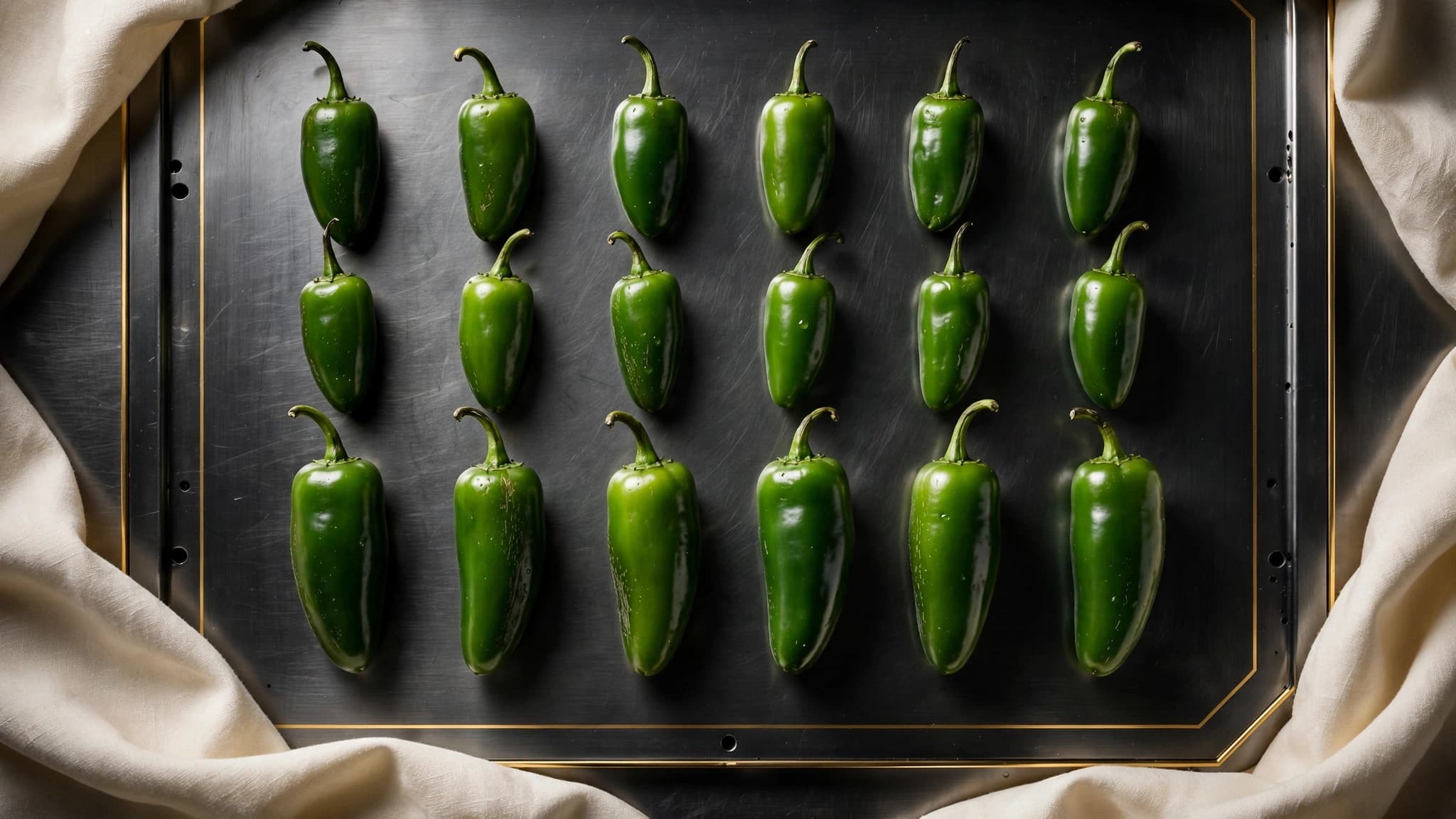
A Salmonella outbreak linked to fresh jalapeños from Sinaloa triggered recalls at Whole Foods, Trader Joe's, Target, Walmart, and other U.S. chains, affecting more than 430 people across 32 states. Beyond the incident itself, the episode reveals a truth every Mexican sauce and condiment manufacturer and exporter needs to internalize: food safety isn't a cost of market entry — it's the most durable competitive asset there is.
When the Supply Chain Makes Headlines
FDA and CDC's investigation traced a Salmonella Javiana outbreak to fresh jalapeños grown by a single producer in Sinaloa, Mexico, distributed in the United States by Coast Citrus Distributors, a California-based company. Illnesses began as early as June 19; the most recent count, as of August 19, reports 431 people affected across 32 states, with 57 hospitalizations and zero deaths reported.

The retail fallout was immediate and cascading. Coast Citrus Distributors initiated a limited recall on July 22 and expanded it to all jalapeños from that source on August 5. Chipotle switched jalapeño suppliers on July 20; Qdoba stopped using jalapeños entirely on July 28. Taylor Fresh Foods — the same supplier implicated months earlier in a Cyclospora outbreak — recalled all its products containing the affected jalapeños on August 8, and stopped sourcing from that grower. Chains including Whole Foods, Trader Joe's, Target, Walmart, and Kroger pulled products containing the contaminated ingredient from shelves — everything from pico de gallo and guacamole to prepared meals, wraps, and even ready-to-eat meat and poultry products, per a parallel FSIS alert.
For those of us who produce and export processed sauces and condiments, this episode doesn't affect us directly: thermally processed products operate under a different food safety framework than fresh produce, which reaches the consumer without any pathogen-reduction step. But the reputational effect is collective. When Mexican jalapeños make FDA headlines, the entire value chain of Mexico-origin condiments enters the radar of the U.S. importer, distributor, and corporate buyer.
The question worth asking this week isn't "how does this outbreak affect us?" It's "how well documented is our own traceability chain?"
Traceability: The Link Nobody Sees Until It Fails
The case exposes something that goes beyond the individual incident: traceability isn't just a certification requirement — it's the first line of reputational defense for any exporter. A company with auditable records, documented good agricultural practices, and lot-by-lot traceability can disentangle itself from an unrelated incident with data in hand. A company without those records is exposed to tracing uncertainty, with all the costs that implies in preventive recalls and damaged business relationships.
For the processed sauce manufacturer, the equivalent is ingredient traceability: being able to document the origin, lot, and safety controls for every chile, vinegar, or spice that enters the production process. Not as a bureaucratic exercise, but as an operational part of the export business.
The Science Behind the Barrier: Hurdle Technology and the Sauce That Defends Itself
In processed condiment preservation, food science has a solid answer to the question of how to build safety without relying on a single control factor: it's called hurdle technology, or multiple-barrier preservation.
The concept, extensively documented in scientific literature, establishes that no single preservation factor — temperature, pH, water activity, preservatives — is sufficient on its own. Durable food safety and shelf life are achieved by combining multiple barriers that act in synergy: each one partially inhibits microbial growth, and together they create an environment where practically no pathogen can thrive.
For an artisanal sauce with export ambitions, a well-designed barrier system can include:
- Controlled pH: acidification via vinegar or citric acid to operate in ranges where Salmonella, Listeria, and E. coli have reduced viability.
- Adjusted water activity (aw): controlling the moisture available for microbial growth.
- Clean-label preservatives: buffered vinegar, cultured dextrose, or nisin — compounds derived from natural processes that carry consumer-friendly label language and comply with FDA/EFSA regulation.
- Validated heat treatment: pasteurization with documented time-temperature records.
- Controlled packaging conditions: vacuum sealing or modified atmosphere as an additional barrier.
Emerging technologies like high-pressure processing (HPP) are adding to this arsenal, inactivating pathogens without heat while preserving fresh flavor profiles — a significant advantage for sauces looking to position themselves as premium and natural at the same time.
The key isn't just implementing barriers — it's validating them with lab records and shelf-life studies that can withstand scrutiny from an importer or an FDA inspection. The document that certifies a product's safety is, in practice, the most robust export passport that exists.
What This Means Depending on Your Role in the Chain
-
Sourcing/Manufacturing: this is the moment to audit how well-documented your food safety processes are. Do you have shelf-life studies with lab results? Can you hand an importer a summary of your barrier system within 48 hours if asked? Clean-label demand isn't slowing down — and the U.S. importer buying enthusiastically today may demand food safety audits as a contract condition tomorrow.
-
Co-Packing: the jalapeño episode reinforces the importance of knowing each supplier's food safety documentation before it reaches the shelf. This isn't paranoia — it's the due diligence that protects your own commercial reputation with your clients.
-
Distribution/Foodservice: the cascading recalls seen in August — sauces, dips, guacamole, prepared foods, and even ready-to-eat meat and poultry — are a reminder that one ingredient's food safety is the whole dish's food safety. Setting minimum traceability criteria for Mexico-origin ingredient suppliers isn't bureaucracy: it's risk management.
-
Investment: a brand that can demonstrate documented food safety, clean label, and ingredient traceability isn't just safer for the consumer — it's easier to scale, more defensible under corporate buyer audits, and more attractive to distributors who learned this summer's lesson.
The Question That Remains Open
The August 2026 jalapeño alert isn't the first episode of its kind, and the industry knows it won't be the last. What changes with each incident is the level of scrutiny institutional buyers, retailers, and regulators apply to every actor in the ecosystem — not just the one directly involved in the outbreak.
Is your company ready to respond to a real-time food safety documentation request? Do you have a validated barrier system you can explain in a meeting with an importer? Do you know exactly which lot every ingredient in your last production run came from?
If the answer to any of these is "not entirely," now is the time to build it — not when the market demands it of you.
Sources: FDA ("Outbreak Investigation of Salmonella: Jalapeño, August 2026"), CDC ("Investigation Update: Salmonella Outbreak, August 2026"), FDA ("2026 Recalls of Food Products Associated with Fresh Jalapeños from Sinaloa, Mexico"), Today.com / NBC News (recall coverage), Fox Business (FSIS alert on meat products).
— Aramiz Molina, Día de Sazón B2B Blog

Part of the Día de Sazón team, focused on manufacturing, sourcing, and B2B business development.
Get new blog articles
Manufacturing, sourcing, and market trends straight to your inbox. No spam.