Perfect Flavor Isn't Enough: Why Acidity Decides Whether a Condiment Is Safe
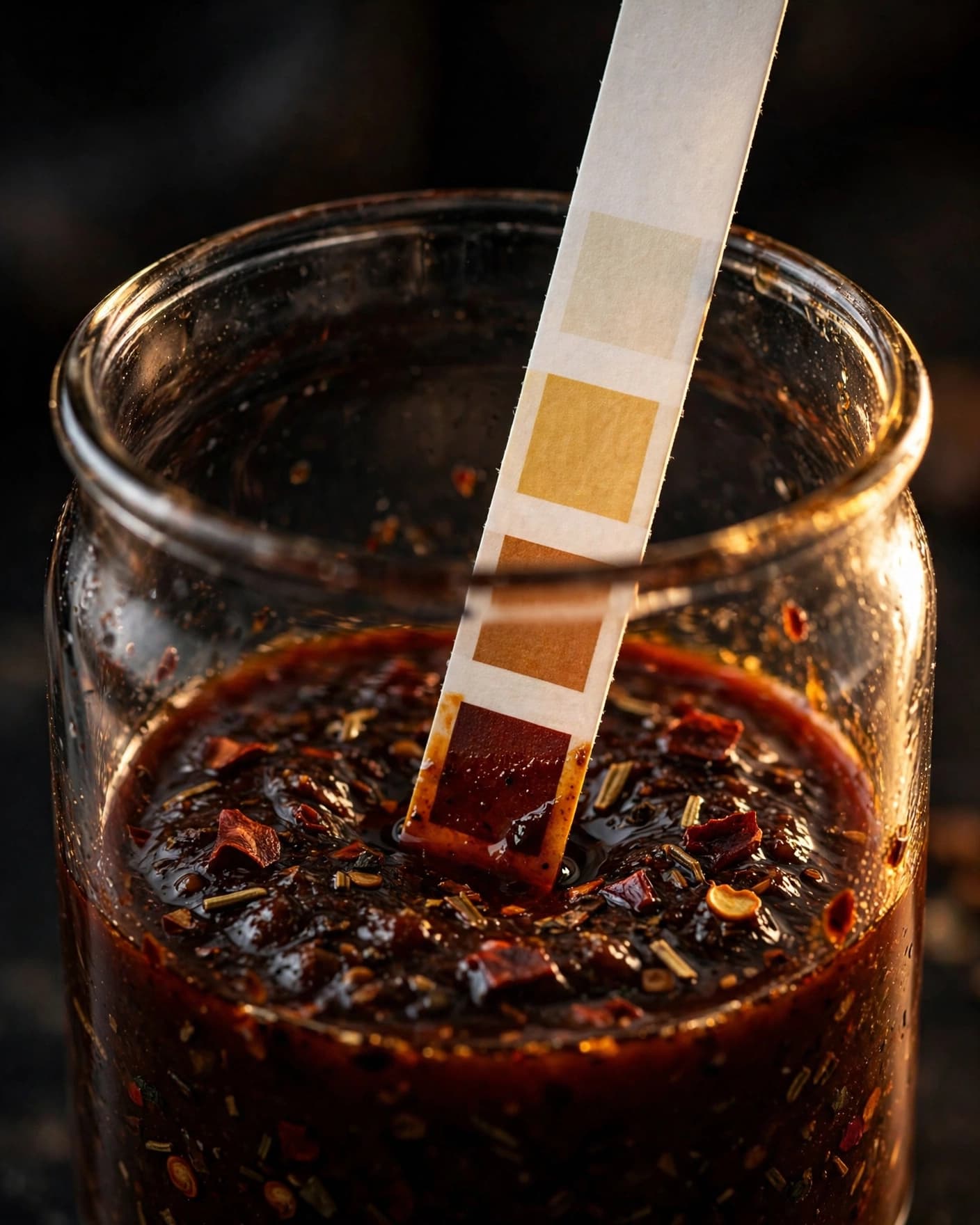
Anyone who's tasted a well-made artisanal sauce knows the flavor comes from a delicate balance: chiles, spices, ingredients with identity, everything in its exact place. What few people know is that this same balance —the recipe itself— has an invisible counterpart that determines whether the product is safe to sell: the acidity balance. And that's where food science sets non-negotiable rules, even for the most beloved family recipe.
The Rule No Brand Can Ignore
In the United States, the regulatory authority (FDA) requires that any acidified food packaged in a jar meet a specific acidity level —technically called "pH 4.6 or below"— in order to be sold with confidence on the shelf, without mandatory refrigeration. The reason is simple: below that acidity level, the most dangerous bacterium in the world of canned goods —the one that causes botulism— simply cannot grow. If a product doesn't meet that threshold, it can't be treated as a standard shelf-stable product: it falls into a category with far stricter and more costly requirements.
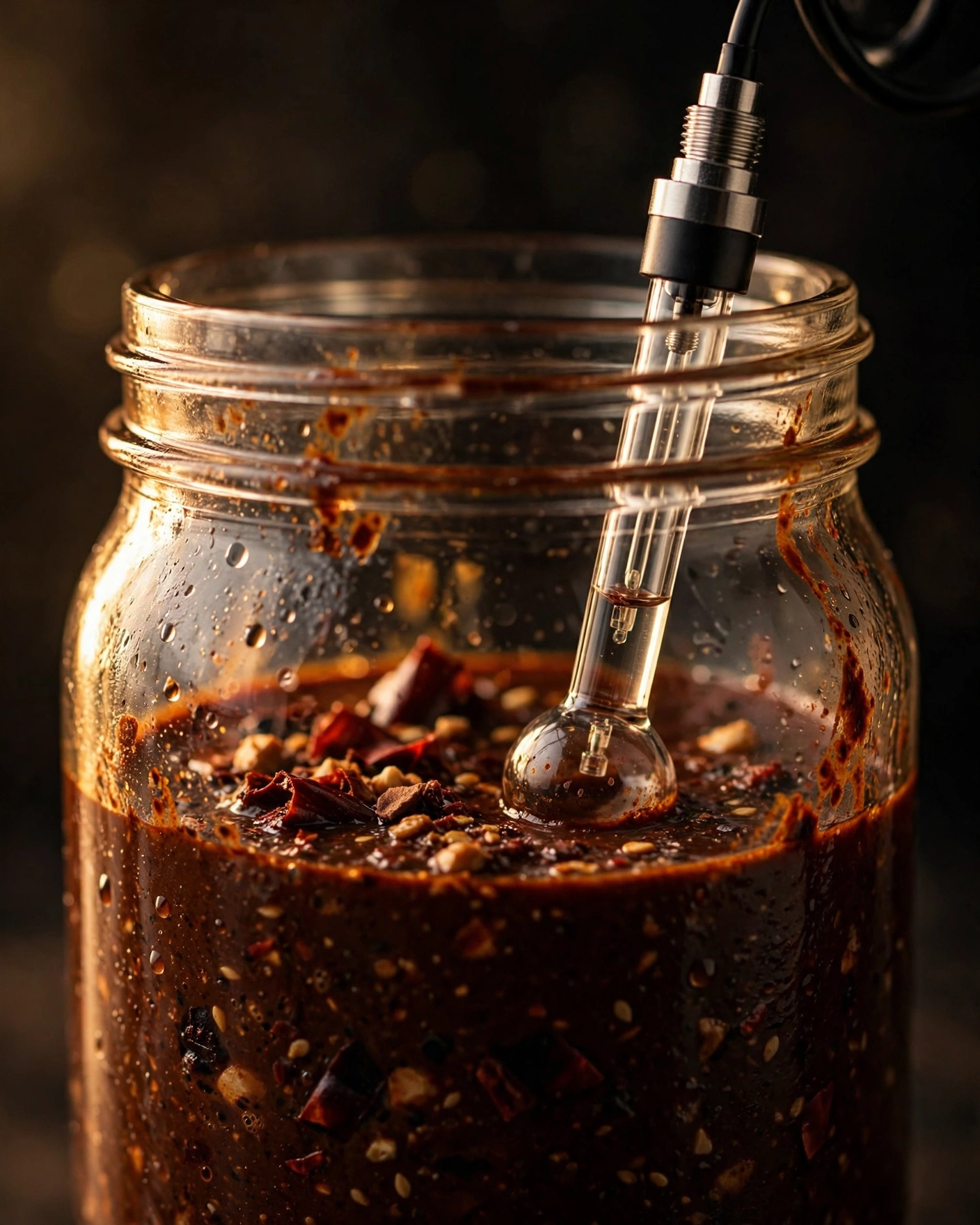
For any sauce or condiment brand aiming to export or sell outside the refrigerated channel, this isn't an optional technical detail — it's the first filter to pass, before even thinking about flavor, packaging, or distribution.
Not All Acids Work at the Same Speed
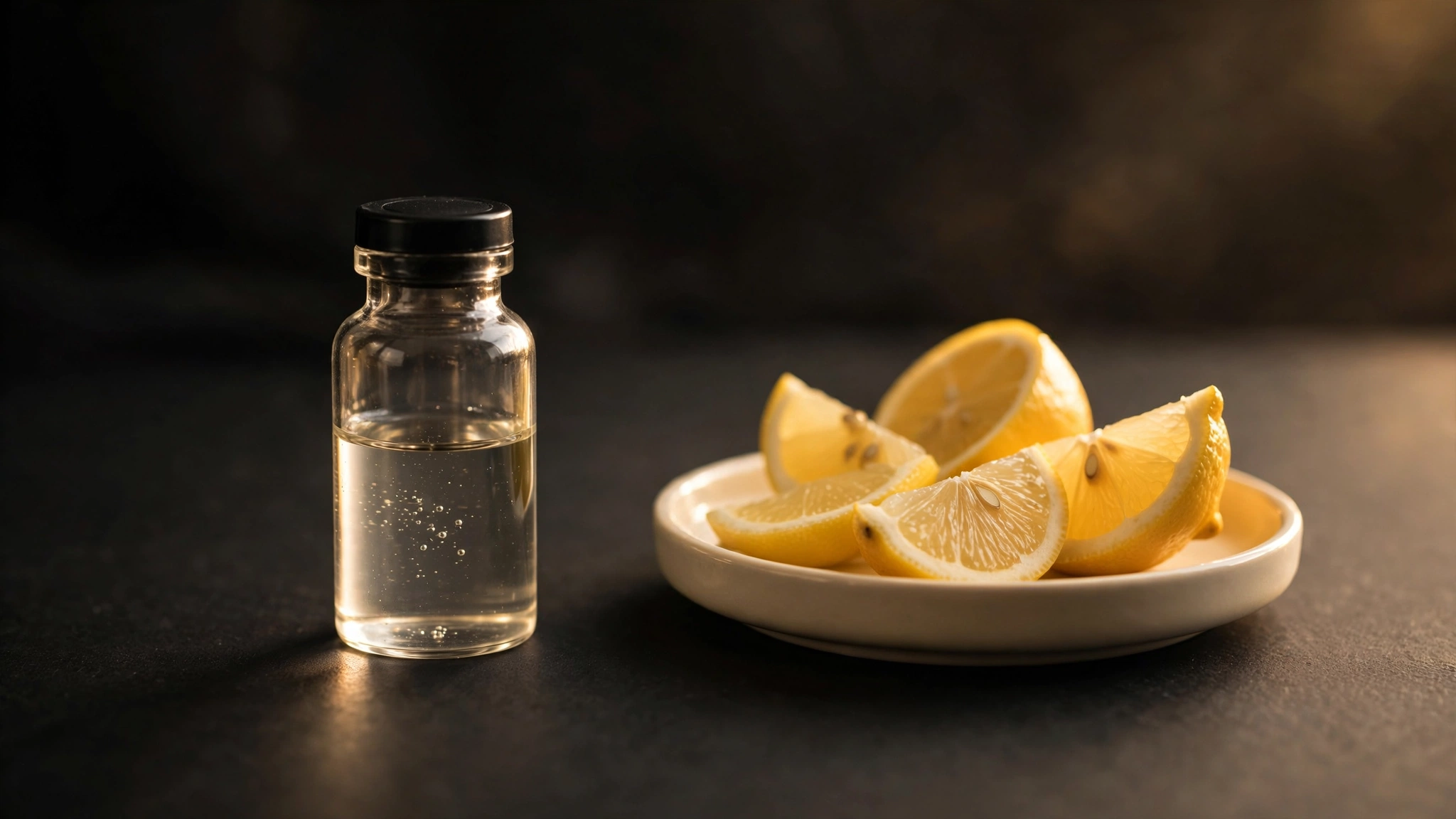
Here's a fact that surprises even industry veterans: it's not enough to simply "lower the pH" of a product with any acid — the speed at which each acid eliminates harmful bacteria varies enormously. In laboratory tests on chile sauces, vinegar (acetic acid) eliminated nearly all harmful bacteria within minutes, while citric acid —a common, more neutral-tasting alternative— took almost two days to achieve the same result. The difference isn't cosmetic: for a brand producing small batches that needs to move inventory quickly, choosing the right acidifier can be the difference between a product that's truly safe from day one and one that's only safe after a waiting period that almost no one respects in practice.
Thick, Complex Sauces Are Naturally Harder to Acidify
Here's the specific challenge for certain styles of artisanal Mexican sauce: they aren't simple liquids. Some are packed with ingredients —seeds, dried chiles, spices, vegetable pastes— that naturally "resist" acidity changes, like a sponge that absorbs acid without letting the pH drop as easily. U.S. government research confirms this phenomenon: the more of these ingredients a recipe contains, the more acid is needed to reach the same safety level —far more than one would calculate by only considering the sauce's base liquid. This means rich, complex formulas with multiple plant-based and origin ingredients require a more careful acidity adjustment process than a simple chile-and-vinegar sauce.
Acidity Alone Isn't Enough — Heat Matters Too
A recent finding confirms something important: adjusting acidity doesn't replace heat treatment. A 2023 study on acidified sauces showed that combining the right temperature during packaging with the correct acidity level produced products that stayed stable for a full 12 months, free of mold, yeast, or bacterial contamination — but acidity alone, without the correct heat treatment, wasn't enough to eliminate all microorganisms of concern. In other words: shelf-stable product safety depends on getting both things right at once, not choosing one over the other.
What This Means for the Industry Artisanal brands and entrepreneurs: It's not enough for a product to "taste just like grandma's recipe" — the same product may need formulation adjustments invisible to the palate in order to be legal and safe to sell on the shelf. Co-packers: Offering acidity analysis and process validation as a service is a real differentiator against companies that only offer production, not guaranteed safety. Distributors and foodservice: Asking for acidity and thermal process documentation from an artisanal supplier should be as routine as asking for quality certifications. Investors: A product with this kind of documented technical validation dramatically reduces the risk of a product recall or regulatory issue after launch. The Open Question
How many beloved, generations-old Mexican artisanal recipes still haven't gone through this kind of technical validation before reaching an export shelf?
Sources: FDA, 21 CFR Part 114; study on acidified chile sauces (PubMed); USDA Agricultural Research Service; Frontiers in Food Science and Technology (2023).
— Aramiz Molina, Blog B2B Día de Sazón

Part of the Día de Sazón team, focused on manufacturing, sourcing, and B2B business development.
Get new blog articles
Manufacturing, sourcing, and market trends straight to your inbox. No spam.