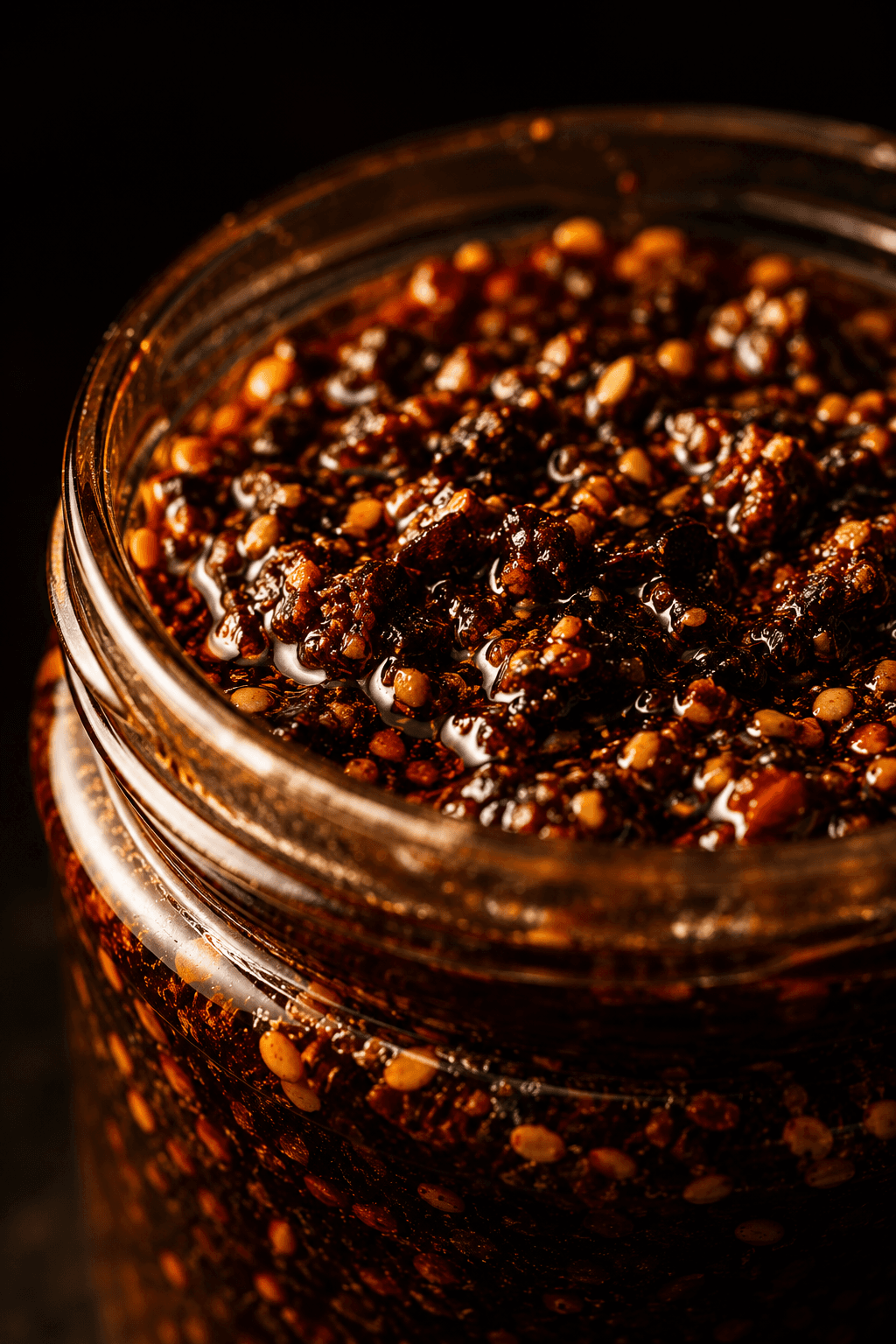
Salsa Macha Already Has a Nickname in the U.S.: "Mexico's Chili Crisp"
Salsa Macha Already Has a Nickname in the U.S.: "Mexico's Chili Crisp"
Over the past two years, specialty food media in the United States has started describing salsa macha with a phrase once reserved for Asian chili oils: "Mexico's chili crisp." Chefs in Austin, Denver, and Dallas already treat it as a kitchen staple, not an ethnic curiosity. And the chili crisp category it's being compared to already moves more than a billion dollars a year.
The question for any Mexican sauce manufacturer isn't whether the category will grow. It's who gets to own the space before larger brands fill it first.
The Evidence
The global chili crisp market reached an estimated value of $1.52 billion in 2025, with a projected compound annual growth rate of 7.1% through 2034, according to an analysis by Growth Market Reports — a figure that should be treated as a market research estimate rather than an official government or exchange-reported number, but one that aligns directionally with editorial coverage of the category.
What makes this number interesting for a Mexican brand is that much of that growth is being captured by Asian and American brands — not Mexican ones — even as they lean on explicitly Mexican language to sell it. Tasting Table documented an "Oaxacan-inspired" variant from a non-Mexican brand (Oo'mämē), featuring pepitas, chipotle, dried mango, and agave, competing within its ranking of the best chili crisp brands on the market.
On the other side, when Tasting Table ran its definitive ranking of nine jarred salsa macha sauces, the winner was, in fact, a Mexican brand: Masienda's Guajillo, Cranberry, and Hazelnut Salsa Macha comfortably swept the competition on balance and texture. The company is a useful proof of concept: Masienda operates out of Oaxaca, working with small-scale traditional Mexican farmers, and its salsa macha even earned dedicated coverage in The New York Times back in 2021. And yet, according to that same editorial piece, the brand has not yet broken into mainstream retail — its distribution still runs primarily through delivery services and specialty stores.
That detail is the real opportunity: the category's editorially-crowned winner still has an unfilled gap in mass distribution.
Chefs interviewed by other outlets confirm the same adoption pattern — describing salsa macha as something they use daily on eggs, sandwiches, and tacos, and drawing a direct comparison to Asian chili oils in texture and versatility.
What This Means Depending on Your Role in the Chain
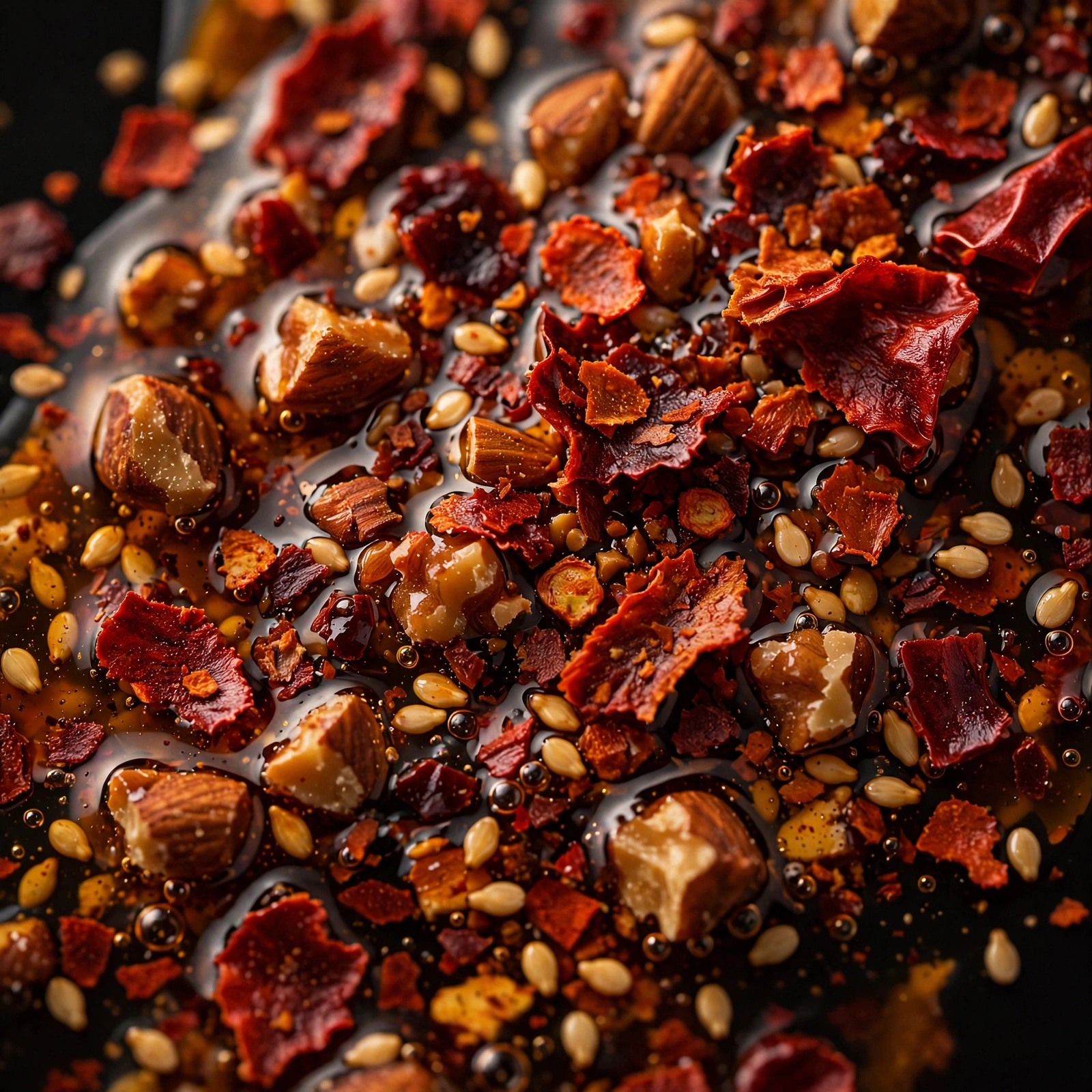
- Sourcing/Manufacturing: the gap isn't inventing the category — demand is already editorially validated — it's having a scalable manufacturing process for a product with suspended particulates (chile, seeds, nuts) in oil, which is more demanding on viscosity control and stability than a conventional liquid sauce.
-
Co-packing: a co-packer that already masters hurdle technology for oil-based products with suspended solids has a head start over those only equipped for traditional bottled sauces. The category still lacks a dominant contract-manufacturing player.
-
Distribution/Foodservice: the editorial ranking confirms end-consumer demand, but the category leader still isn't in mass retail. That leaves an open window for whoever can reach supermarkets or foodservice with organized distribution first, rather than relying solely on direct-to-consumer delivery.
-
Investment: the size of the adjacent market (chili crisp, roughly $1.52 billion in 2025 per industry estimates) provides useful scale context, but salsa macha itself is still an emerging subcategory without its own verified market-sizing data — any investment thesis should treat the chili crisp figure as directional context, not as the actual size of the Mexican opportunity.
What needs to happen for a Mexican artisanal brand to occupy the distribution space the category still has open?

Sources:
- Growth Market Reports, "Chili Crisp Market Report 2025-2034" (June 2026)
- Tasting Table, "9 Jarred Salsa Machas, Ranked"
- Tasting Table, "Our Favorite Jarred Salsa Macha Flavor Is Untraditional And Perfectly Balanced" (August 2025)
- Tasting Table, "The 15 Best Chili Crisp Brands, Ranked"
- The Kitchn, "We Asked 3 Chefs to Name the Best Jarred Salsa, and They All Said the Same One"
— Aramiz Molina, Día de Sazón B2B Blog

Part of the Día de Sazón team, focused on manufacturing, sourcing, and B2B business development.
Get new blog articles
Manufacturing, sourcing, and market trends straight to your inbox. No spam.