Swangy, Clean Label, and Preservative-Free: The Perfect Storm for Artisanal Condiments
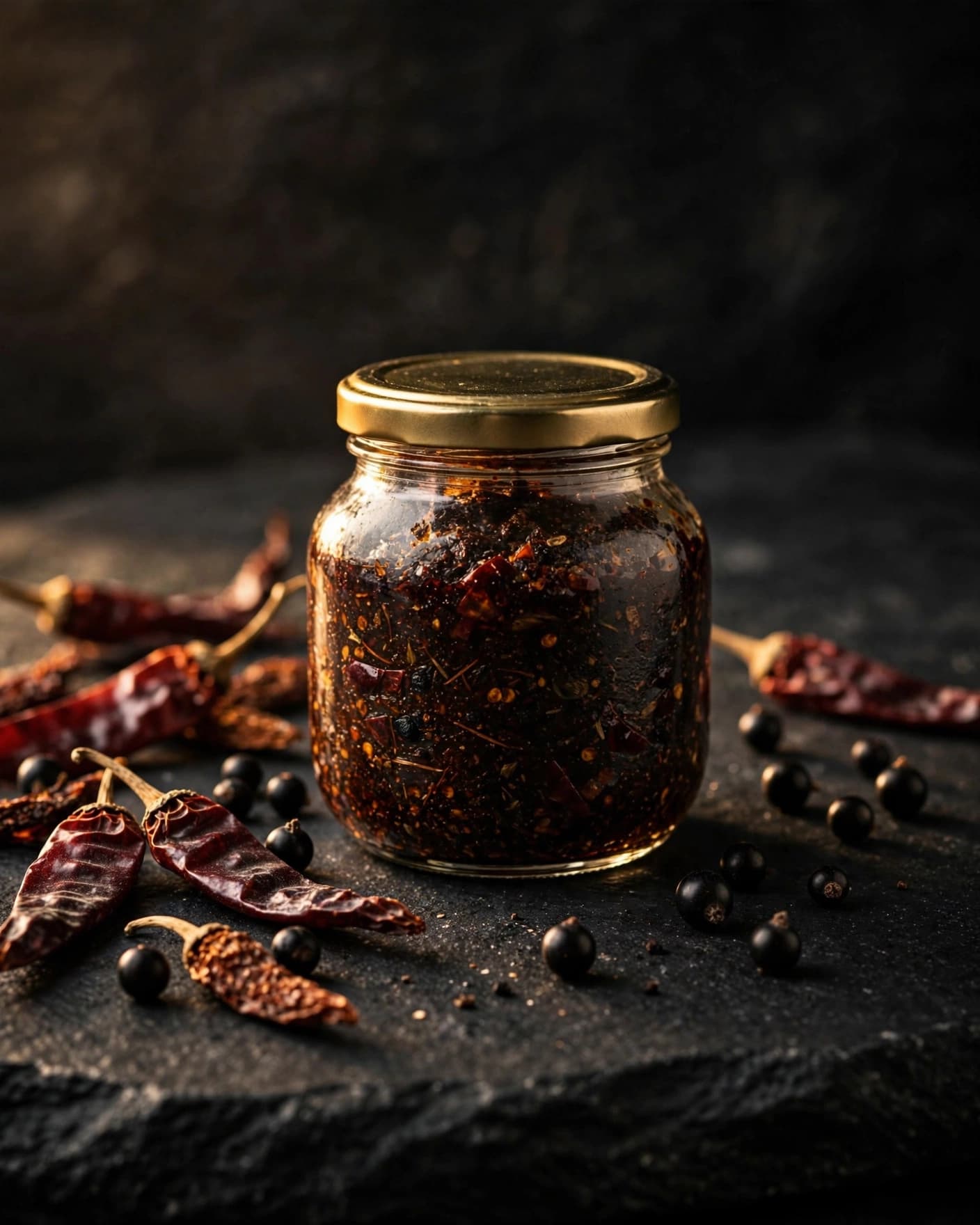
What do Coca-Cola, the owner of Sara Lee, and the FDA have in common this week? All three are talking, in their own way, about the same phenomenon: heat has stopped being a flavor and become a value system. The most recent signal came from the USPTO on July 9, when Coca-Cola filed a trademark application for "Spricy" — widely interpreted as a possible spicy version of Sprite — according to Food Dive. If the global soda giant is considering a return to heat after discontinuing Coca-Cola Spiced in 2024 after just seven months on shelves, the data behind that bet deserves attention.
From "Swicy" to "Swangy": The Maturing of the Spicy Palate
The swicy trend — sweet + spicy — dominated much of 2025 and remains active in 2026, with consumers mixing sodas with jalapeño or pickle brine on social media. What's now starting to emerge is its natural evolution toward more complex combinations: profiles that add a third note — tangy, tannic, or umami — to the sweet-spicy pairing.
Evidence of this shift toward complexity spans categories. McCormick named black currant its 2026 Flavor of the Year: a berry with a distinct yet balanced flavor profile, sweet, tart, and rich. One of the brand's materials describes it as rising fast, with consumption interest up 23% year over year, even though only about a fifth of U.S. consumers have tried it — in other words, emerging demand with real room to grow, not an already-saturated trend. That the world's largest spice company would choose a flavor profile still largely unfamiliar in Mexico and Latin America suggests the English-speaking consumer is ready for more sophisticated layers of flavor than simple heat. Producers formulating with origin-specific chiles, fermentation, or botanical notes are playing in that same territory of anticipation.
The FDA and the Critical Moment for Preservatives
On July 14, at the IFT First conference in Chicago, Donald Prater, the FDA's acting deputy commissioner for food, acknowledged that defining what counts as an "ultra-processed food" is "a complex answer." The agency is still reviewing comments from a public request for information open since 2025, without having yet issued a binding federal definition. This regulatory ambiguity creates fertile — and also uncertain — ground for the entire food industry.
Without a single federal standard, every retailer, distributor, and foodservice chain applies its own criteria, often stricter than any regulation currently in force. The practical result: institutional buyers are already using informal filters to select suppliers in their sourcing processes.
Big industry's reaction speaks for itself. Bimbo Bakeries USA, owner of Sara Lee, Oroweat, and Thomas' English Muffins, announced in early July a commitment to remove artificial preservatives and emulsifiers from Artesano, Oroweat, and Rustik Oven by the end of 2027, and from Sara Lee, Oroweat specialty varieties, Little Bites, and Thomas' by the end of 2028 — making it the first industrial baking company to make this commitment across a full portfolio. The cost of reformulating at that scale is considerable. For makers of artisanal condiments whose formulas never included those additives in the first place, the competitive advantage already exists. The challenge is documenting and communicating it precisely at every B2B touchpoint.
Hurdle Technology: The Science That Makes Clean Label Possible
The technical challenge of doing without synthetic preservatives without sacrificing shelf life is far from trivial, but preservation science has spent more than two decades building the tools needed to solve it. Hurdle technology — multiple-barrier preservation — is today the scientific foundation of clean label in acidic and semi-moist categories like condiments.
The principle is elegant in its logic: instead of relying on a single preservative to inhibit microbes, multiple control factors are combined — pH adjustment, water activity (Aw), process temperature, modified atmosphere, dosed heat treatment — to create an environment systematically inhospitable to pathogens and mold. Each "barrier" may be insufficient on its own; together, they build a robust, documentable, and auditable preservation profile without a single synthetic preservative molecule on the label.
For spicy condiments, this approach has inherent advantages: the naturally acidic pH of vinegar-based or fermented sauces, combined with proper water activity management, can build solid preservation profiles without resorting to single-function additives.
In parallel, the ingredients industry keeps innovating in that same direction of label simplicity. Del Monte Corporation and specialty supplier Treatt announced a partnership in July to launch clean-label fruit extracts — pineapple, watermelon, mango, and cantaloupe — made from fruit portions that don't make it into finished fresh-cut products, designed to deliver authentic flavor in beverages without synthetic additives. The move confirms that appetite for functional ingredients with recognizable origins keeps growing across the supply chain, though in this specific case the focus is flavor and sustainability, not preservative replacement.
E-Commerce: The Channel That No Longer Tolerates Long Labels
The digital channel is amplifying clean-label pressure from a different angle than regulation. When an institutional buyer — or an end consumer — purchases a food product online, they have full access to the ingredient list before clicking "add to cart." There's no attractive packaging to distract attention from a long row of E-XXX additives.
Marketplaces specializing in premium and artisanal foods already build in search filters for criteria like "no artificial preservatives," "clean label," or "recognizable ingredients" — and not only in consumer-facing channels: B2B sourcing platforms for foodservice and retail are incorporating these same criteria into their supplier cataloging and selection systems.
Distributors building their portfolio today with brands that already meet clean-label criteria won't have to overhaul their catalog when regulation or demand tightens standards over the next 18 to 24 months. The window to take a position without urgency exists now; it won't necessarily still exist once the federal definition arrives.
What This Means Depending on Your Role in the Chain
- Sourcing/Manufacturing: investment in technical validation of hurdle technology — shelf-life studies with natural formulas, microbiological risk analysis, barrier documentation — is more urgent today than it was two years ago. The differentiator is no longer making something spicy; it's proving you can do it with microbiological certainty and without synthetic additives, backed by third-party auditable documentation.

-
Co-Packing: the portfolio you build now needs to anticipate the regulatory conversation. Brands that already carry a clean label represent guaranteed supply chain continuity. Those that don't represent a latent delisting risk once the federal definition arrives or the next major retailer updates its listing criteria.
-
Distribution/Foodservice: the swangy profile — complex, tangy, spicy, with botanical or origin-specific notes — is exactly what a premium fast-casual executive chef needs to differentiate on the menu. A sauce with clean label, documented origin, and a complex sensory profile is a purchase argument that doesn't require price negotiation; it sells itself in the menu pitch.
-
Investment: the convergence of regulatory pressure (FDA defining ultra-processed foods), shifting purchase behavior (clean label as a baseline expectation), and flavor evolution (complexity over intensity) points to a consolidation cycle in which artisanal brands with documented processes and clean formulas will be attractive assets over the next 24 to 36 months.
This Week's Question
The clean-label wave is arriving simultaneously from regulation, retail, foodservice, and the digital channel. But the technical challenge of reformulating without sacrificing shelf life remains the real bottleneck for many industrial brands that still depend on synthetic preservatives today. How is your operation solving this — investing in in-house formulation with barrier science, partnering with functional ingredient suppliers, or relying on external validation from specialized labs?
Sources: Food Dive, Food Business News, FoodBev Media, IFT First Conference Chicago (July 2026), McCormick Flavor Forecast 2026, Bimbo Bakeries USA / Grupo Bimbo, Del Monte Corporation / Treatt, USPTO (trademark filing "Spricy"), Gerben IP.
— Aramiz Molina, Día de Sazón B2B Blog

Part of the Día de Sazón team, focused on manufacturing, sourcing, and B2B business development.
Get new blog articles
Manufacturing, sourcing, and market trends straight to your inbox. No spam.