The Macha Moment: How a Trader Joe's Jar Validated Everything Día de Sazón Already Knew
There's a moment in the life of any traditional ingredient when it stops needing an explanation. For salsa macha, that moment arrived in 2026, and it arrived with the signature of one of the most influential retail chains in the United States.
Trader Joe's put its own version of salsa macha on the shelf — sesame seeds, sunflower seeds, pepitas, and pequin chiles in oil — and Taste of Home, one of the country's most-read food outlets, didn't just try it: they named it a Taste of Home Award winner. The editor who tasted it summed up the moment in a single line now circulating across social media and specialty forums: salsa macha is like chili crisp's Mexican cousin.
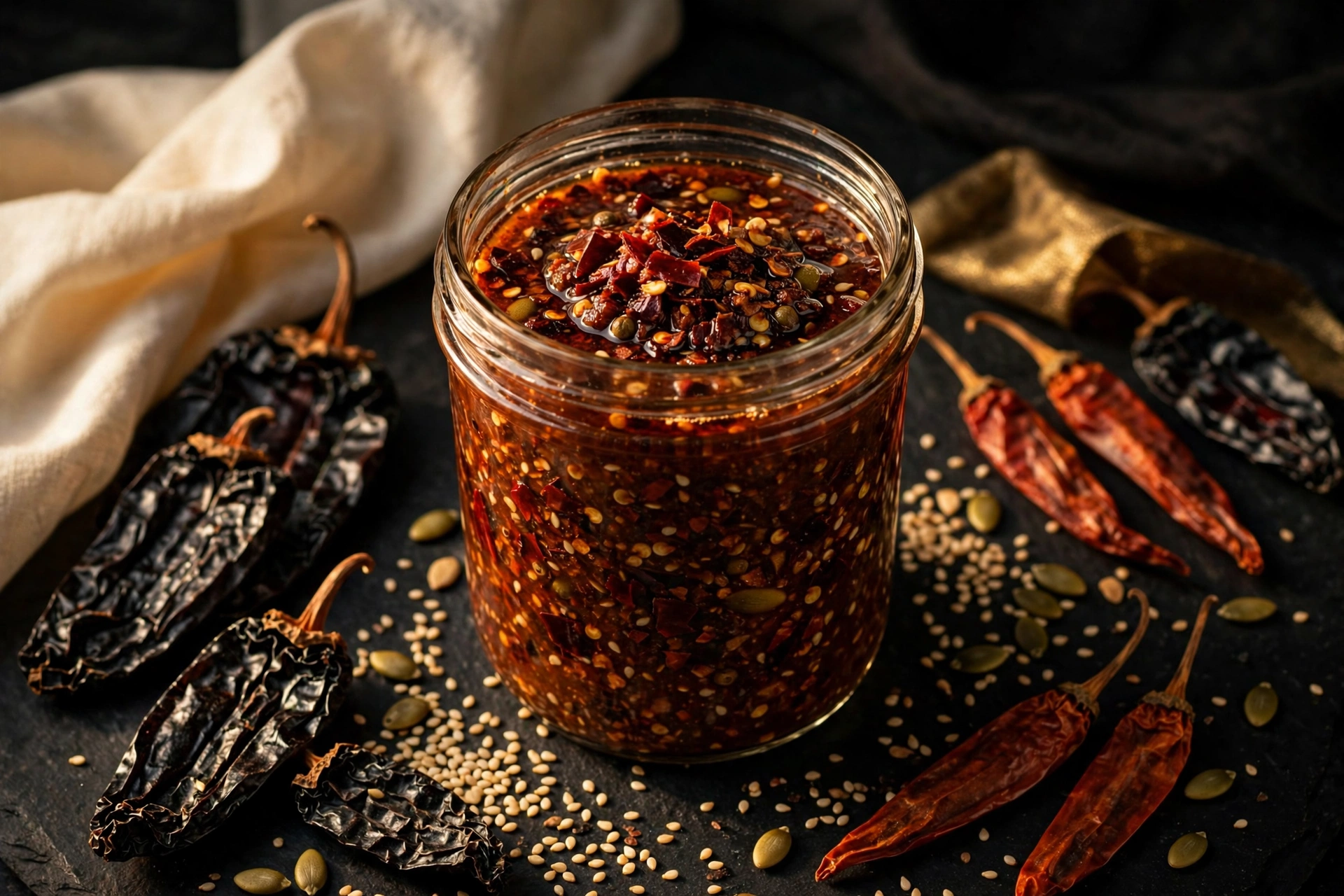
That line isn't just a product compliment. It's a category-positioning signal. When the outlet describes it, they explain that it's a blend of oil, seeds, nuts, garlic and chile peppers that originated in Veracruz, Mexico, and it's hands-down one of the best things you'll ever eat on a taco — or on eggs, chicken salad, fish, roasted vegetables, almost anything. The article draws a precise distinction between salsa macha and Asian chili crisp: both use chile peppers for heat, but chili crisp often incorporates tongue-tingling Sichuan pepper, while salsa macha uses smokier ancho, morita, guajillo, or arbol peppers typically found in Mexican cuisine.
For any Mexican sauce manufacturer, this isn't a supermarket product note. It's confirmation that the U.S. market has already understood the category, already tasted it, and already awarded it editorially — without any artisanal Mexican brand having to do that consumer education work themselves.
The Wave Isn't Just U.S.-Based — It's Structural, and It Starts in Mexico
The most interesting part of this moment isn't that it happened in the United States. It's that it's happening at the same time the Mexican market itself is revaluing its own traditional sauces from within.
Data from Tastewise, a consumer intelligence firm with active panels in Mexico, documents that mole poblano grew 40% over the past twelve months, in an emerging lifecycle stage — a premium sauce base with deep heritage equity and growing demand in both restaurant and retail applications. Salsa macha shows the same 40% growth over the past year. But the figure that should catch any formulator's attention most is a different one: sazón is growing 68% over the past year at nearly 3% consumer share — the only trending ingredient in Mexico with both scale and velocity simultaneously, making it a commercially defensible formulation platform, not a niche bet.
The pattern repeats across several categories at once: mole (+23%), mole poblano (+40%), salsa macha (+40%), and adobo (+19%) are all growing simultaneously over the past twelve months — a structural revaluation of traditional Mexican sauce infrastructure, not a coincidence. And the language winning the consumption conversation isn't generic — it's specific and origin-based. "Casero" (homemade) is the largest trending consumer motivation in Mexico, at 7.5% share and up 78% since last year — while generic health messaging is declining 30% over the same period.
Translated: the Mexican consumer is no longer buying "healthy" as an empty concept. They're buying "homemade," "grandma's recipe," "from the region" — exactly the narrative ground where a brand like Día de Sazón, with a documented multigenerational family recipe, doesn't have to invent anything. It just has to tell it well.
Mole Has Already Crossed From the Restaurant to the Everyday Table in the U.S.
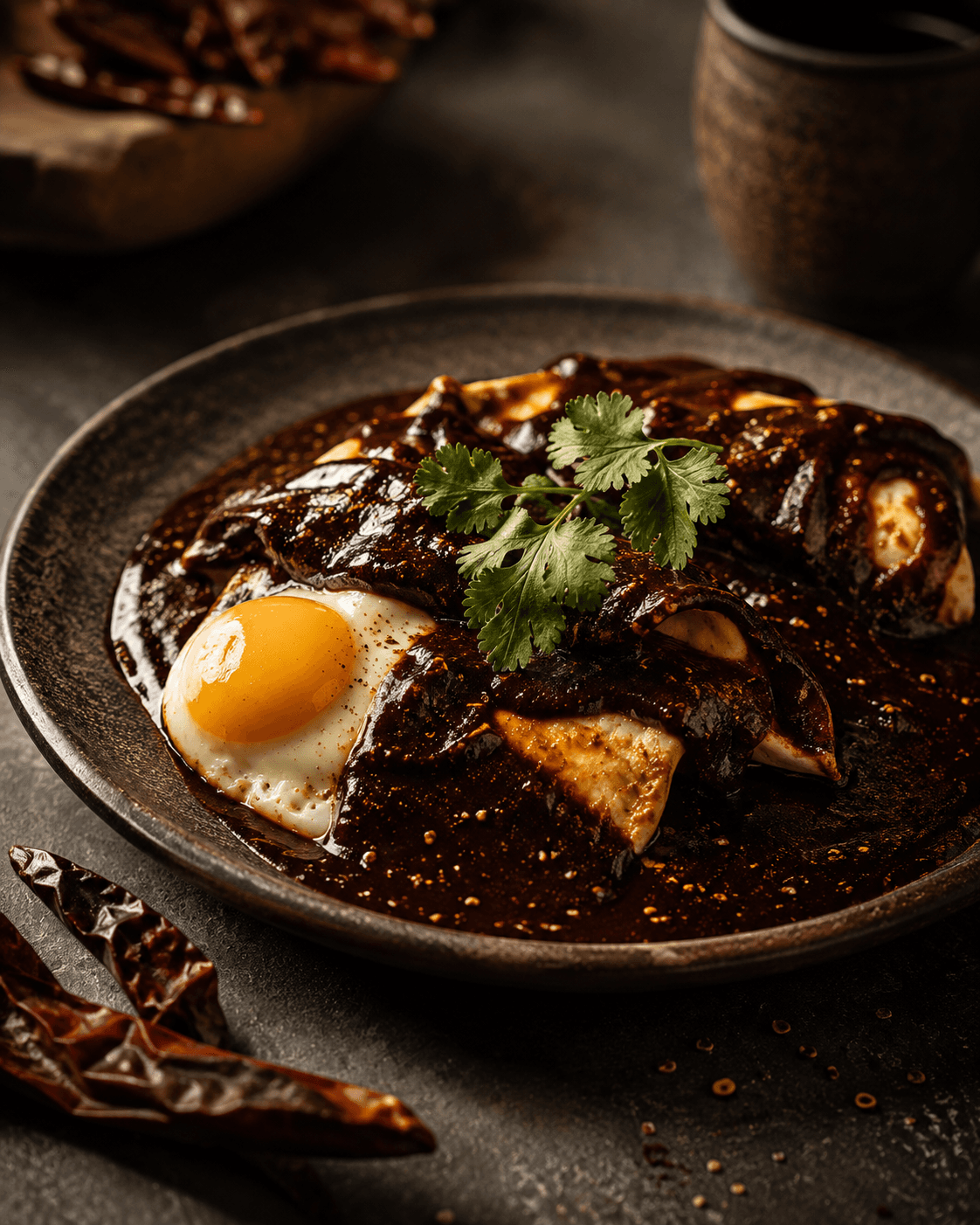
If salsa macha is the 2026 shelf story, mole is having its own moment on the menu. Technomic, a foodservice intelligence firm, named mole a "blazing" trend on its Q1 2026 Buzz Barometer — the firm's highest-urgency category, meaning operators should adopt it immediately, according to its own methodology. 2026 data from Datassential shows mole up 12% on breakfast menus, 8% on dinner menus, and 4% on all-day menus over the past twelve months — with eggs among the proteins it pairs with most.
This matters because it confirms something the retail data alone doesn't show: mole isn't just growing as a supermarket product. It's gaining ground on the American consumer's table at the hardest time of day to win — breakfast — exactly where the "I don't have three hours to make mole" barrier is the problem a ready-to-use artisanal mole can solve.
What This Means for the Broader Hot Sauce Market
The wider context also favors brands with real history. The U.S. hot sauce market reached $1.17 billion in 2025 and is projected to nearly double, to $1.95 billion, by 2032, according to Fortune Business Insights. That growth isn't being split evenly between generic heat and heat-with-narrative: as we covered in our previous article on this same category, the differentiator the market rewards today is no longer the Scoville scale — it's flavor complexity, origin, and process.

Salsa macha and mole share exactly that profile: real sensory complexity, specific geographic origin, and an artisanal process that — unlike almost any viral food trend — can't be easily faked with marketing.
What This Means Depending on Your Role in the Chain
-
Sourcing/Manufacturing: the market no longer needs salsa macha explained to it. Trader Joe's and Taste of Home did that consumer education work for the entire category, free of charge. The challenge now is formulation and consistency — making sure a salsa macha or mole with an authentic recipe can scale without losing the sensory profile that sets it apart from adapted mass-retail versions.
-
Co-Packing: the differentiation window is in the detail, not the concept. Trader Joe's version uses seeds instead of peanuts; the market has already started noticing and commenting on that recipe variation. A co-packer that can maintain fidelity to the traditional recipe — with the twenty to forty ingredients tradition documents for mole — has a verifiable authenticity argument against adapted retail versions.
-
Distribution/Foodservice: mole's rise on U.S. breakfast menus is a still-underexploited signal. Most mole positioning in foodservice remains anchored to dinner and special occasions; there's real room for breakfast and lunch mole formats, backed by menu data that's already in hand.
-
Investment: simultaneous growth in Mexico (mole poblano, salsa macha, sazón) and the United States (editorial validation, rising menu presence) lowers the risk that this is a single-market fad. When demand grows in both the country of origin and the export market at the same time, that's a category signal, not a marketing campaign.
This Week's Question
Trader Joe's and Taste of Home already did the hardest work: educating the American consumer on what salsa macha is and why it should matter to them. The question left open is who gets to own the "which one is the authentic one" conversation — the mass-retail brand that got to the shelf first, or the brand with a documented family recipe that can prove its origin?
Sources: Taste of Home ("Trader Joe's Salsa Macha: Taste of Home Award"), Tastewise ("Food Trends In Mexico 2026: What The Data Says Right Now"), FSR Magazine / Technomic Q1 2026 Buzz Barometer, Datassential (via FSR Magazine), Fortune Business Insights ("U.S. Hot Sauce Market Size, Share & Trends").
— Aramiz Molina, Día de Sazón B2B Blog

Part of the Día de Sazón team, focused on manufacturing, sourcing, and B2B business development.
Get new blog articles
Manufacturing, sourcing, and market trends straight to your inbox. No spam.