Triple Convergence: The Technical and Commercial Moment for Mexican Artisanal Condiments

Triple Convergence: The Technical and Commercial Moment for Mexican Artisanal Condiments
When was the last time three completely independent trends pointed to exactly the same place in the market? That's precisely what's happening with Mexican-origin artisanal condiments in 2026: market size keeps growing, the most influential consumer profile is actively returning to ingredients with history, and food preservation science is finding a new research frontier in chile compounds and traditional spices.
A Market That Keeps Growing
The U.S. hot sauce production industry reached close to $2.9 billion in 2025, with a compound annual growth rate of 2.9% over the prior five-year period, according to IBISWorld data. This growth is occurring against a complex macroeconomic backdrop, which makes it even more notable. The artisanal and premium segment —which includes brands with well-defined geographic origin, formulas rooted in cultural identity, and small-batch processes— is outpacing the broader market average.
The 2026 Consumer Wants Roots, Not Trends

In its Global Food & Drink Predictions for 2026, Mintel identifies what it calls "Retro Rejuvenation": the growing preference for products rooted in trusted traditions, ingredients with history, and well-documented cultural practices. Amid global uncertainty, consumers are looking for anchors of trust in their purchasing decisions.
Mexican artisanal condiments are, by construction, an extraordinary vehicle for this kind of authenticity. Chile profiles, spice combinations, fermentation processes or slow-cooking methods aren't marketing claims — they're verifiable technical characteristics with potential for designation of origin.
The Science Behind Chile: Much More Than Flavor
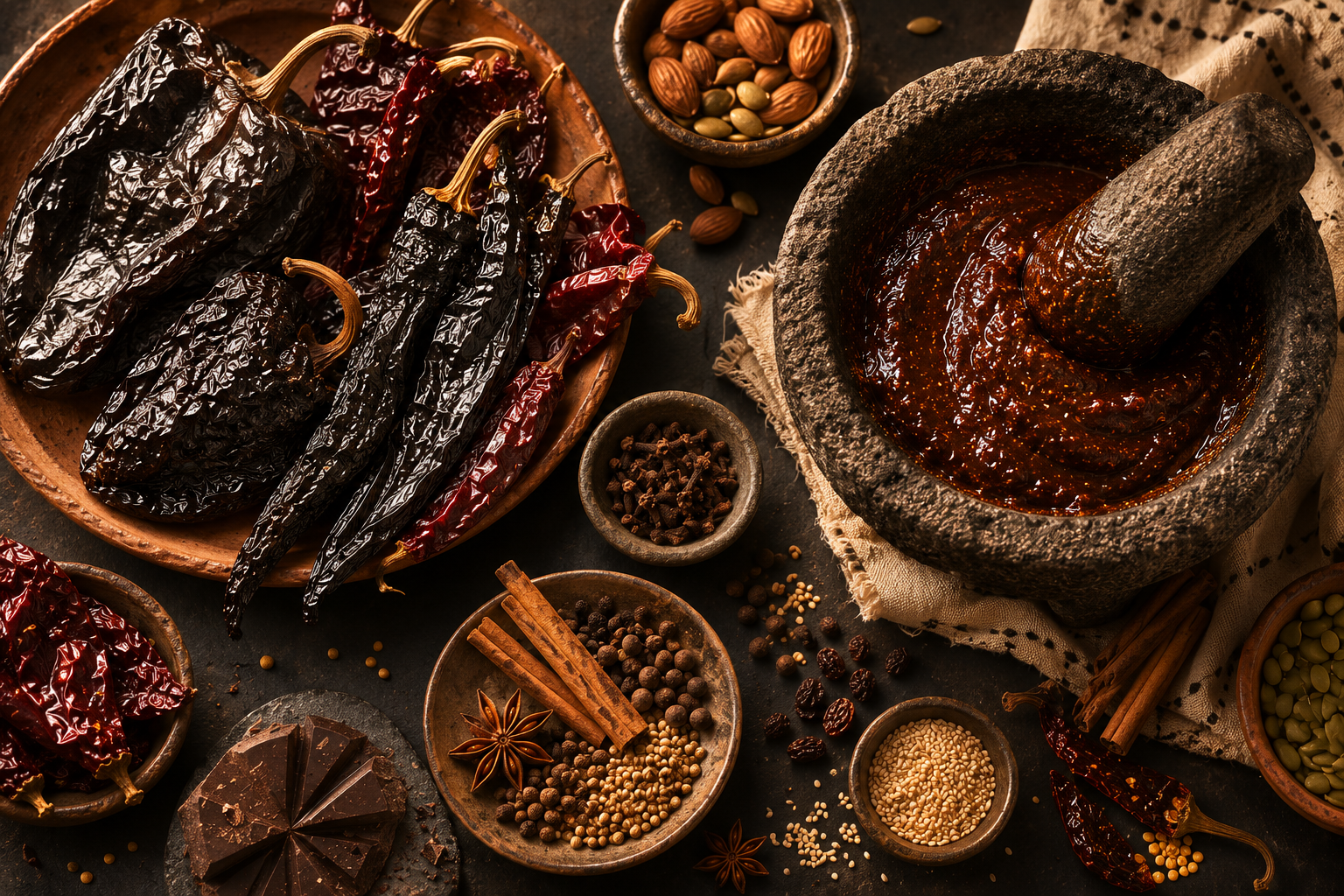
A 2026 review published in Critical Reviews in Food Science and Nutrition documents that phytochemicals such as essential oils, phenolics, terpenoids, and alkaloids —naturally present in common Mexican cuisine ingredients like chile, garlic, and oregano— show documented antimicrobial mechanisms against pathogens including Listeria monocytogenes, E. coli, Salmonella spp., and Staphylococcus aureus.
A 2026 study published in Microorganisms demonstrated that combining bacteriocins and high hydrostatic pressure as active hurdles not only prevented bacterial proliferation but also modulated the microbial dynamics associated with spoilage —with direct implications for extending shelf life in refrigerated, ready-to-eat products.
The natural acidity of a product made with fresh chile and vinegar, combined with the phenolic profile of dried chiles and the antimicrobial activity of essential oils, already constitutes a de facto hurdle system.
What This Means Depending on Your Role in the Chain
-
Sourcing and manufacturing: Technical documentation of the bioactive profiles of origin ingredients becomes a technical asset with value in audits, certifications, and product differentiation.
-
Co-packing: Operators who develop validation protocols for hurdle technology based on natural ingredients will be better positioned to attract brands looking to scale without sacrificing their clean-label profile.
-
Distribution and foodservice: A verifiable origin story —now backed by preservation science, not just branding— opens doors in premium channels.
-
Investment: The segment today has three converging theses: a growing market, an aligned consumer profile, and technical backing to scale with clean label. Most premium segments have two out of three.
The Open Question
If science is documenting what tradition already knew, who in the industry will be the first to translate that technical validation into a commercial proposition the channel can sell, the distributor can back, and the foodservice operator can put on a menu with confidence?
Sources: IBISWorld; Mintel, Global Food & Drink Predictions 2026; Critical Reviews in Food Science and Nutrition (Awlqadr et al., 2026); Microorganisms (Rodríguez López et al., 2026).
— Aramiz Molina, Blog B2B Día de Sazón

Part of the Día de Sazón team, focused on manufacturing, sourcing, and B2B business development.
Get new blog articles
Manufacturing, sourcing, and market trends straight to your inbox. No spam.